5 Things to Know About Trump’s Board of Peace
 1,817 Views
 Comments (1)
 Share (6)
Print
Share (6)
Print
Desperate for Change—Day 16
Mexican Leaders View Migration as a Tool to Conquer America’s Southwest
The Power of Your Prayers: Capitol Connections
Trump Announces U.S. Naval Ships Are Headed to Iran
5 Things to Know About Trump’s Board of Peace
1,817 Views
Comments (1)
Share (6)
Print
 I Prayed
have prayed
I Prayed
have prayed
President Donald Trump unveiled the charter of the newly established Board of Peace in a ceremony at the World Economic Forum in Davos, Switzerland Thursday. The Board of Peace will work to rebuild the war-torn Gaza Strip in the Middle East, which has borne the brunt of bloodshed since Israel launched its defensive military action to destroy the Hamas terrorist network after the Oct. 7, 2023, terror attacks.
Post a prayer for your state!
While several countries have joined the Board of Peace, others have opted out thus far. Several notable political figures at home and abroad have also joined the international body, which constitutes one of several aspects of a deal designed to secure peace in Gaza.
Here are five things to know about the Board of Peace.
1. What is the Board of Peace?
The establishment of a “Board of Peace” is part of Trump’s peace deal to end the Israel-Hamas conflict, which was first unveiled in September 2025. The United Nations Security Council approved the establishment of a Board of Peace as part of Resolution 2803 in November, describing it as “a transitional administration with international legal personality that will set the framework, and coordinate funding for, the redevelopment of Gaza pursuant to the” peace plan.
As explained in a statement published by the White House last week, an Executive Board on the Board of Peace will “oversee a defined portfolio critical to Gaza’s stabilization and long-term success, including, but not limited to, governance capacity-building, regional relations, reconstruction, investment attraction, large-scale funding, and capital mobilization.”
The charter of the Board of Peace identifies its purpose as to “promote stability, restore dependable and lawful governance, and secure enduring peace in areas affected or threatened by conflict.” It consists of member states, which have been invited to join the body by its chairman, Trump.
2. Who is on the Board of Peace and who is not?
Representatives of several countries signed onto the charter forming the Board of Peace at Thursday’s ceremony: Argentina, Armenia, Azerbaijan, Bulgaria, Hungary, Indonesia, Jordan, Kazakhstan, Kosovo, Mongolia, Pakistan, Paraguay, Qatar, Saudi Arabia, Turkey, United Arab Emirates and Uzbekistan.
Additional countries that have accepted Trump’s invitation to join the Board of Peace are: Albania, Bahrain, Belarus, Egypt, Israel, Kuwait, Morocco and Vietnam.
In its statement published last week, the White House announced that the Executive Board of the Board of Peace will consist of Secretary of State Marco Rubio, U.S. Special Envoy to the Middle East Steve Witkoff, Trump’s son-in-law Jared Kushner, former U.K. Prime Minister Tony Blair, Apollo Global Management CEO Marc Rowan, World Bank President Ajay Banga and U.S. Deputy National Security Advisor Robert Gabriel Jr.
According to The Washington Post, only five countries have explicitly declined Trump’s invitation to join the Board of Peace: Denmark, France, Norway, Slovenia and Sweden.
Meanwhile, countries that have not formally responded but have not ruled out joining the Board of Peace include: Australia, Austria, Brazil, Cambodia, Canada, China, Croatia, Cyprus, Czechia, Finland, Germany, Greece, India, Ireland, Italy, Japan, The Netherlands, New Zealand, Oman, Poland, Portugal, Romania, Russia, Singapore, South Korea, Spain, Switzerland, Thailand, Ukraine, the United Kingdom, Vatican City and the European Union.
3. Requirements for members and leaders of the Board of Peace
As detailed in its charter, membership in the Board of Peace lasts for a three-year term and is subject to renewal by Trump. The charter clarifies that “the three-year membership term shall not apply to Member States that contribute more than USD $1,000,000,000 in cash funds to the Board of Peace within the first year of the Charter’s entry into force.”
Countries can voluntarily withdraw from the Board of Peace. Trump can also remove member states from the Board of Peace, but any such decision is subject to a veto of two-thirds of the member states.
Trump will remain as chairman of the Board of Peace until he decides to step down. Any potential successor to Trump as chairman must be chosen by the president himself and approved by a unanimous vote of the Executive Board. Members of the Executive Board serve two-year terms, with renewal subject to approval by the president.
4. The Board of Peace might not be permanent
While the charter’s provisions on three-year terms for Board of Peace membership suggest the international body will be around for a while, additional language in the document indicates it could dissolve in the near future. “The Board of Peace shall dissolve at such time as the Chairman considers necessary or appropriate, or at the end of every odd-number calendar year, unless renewed by the Chairman no later than November 21 of such odd-number calendar year,” the charter states.
The authorization for the Board of Peace laid out by the U.N. Security Council extends through Dec. 31, 2027. At that time, the U.N. Security Council will decide whether or not to extend the authorization.
5. What else is part of the Gaza Peace Deal?
An additional aspect of the peace deal involves the creation of a National Council for the Administration of Gaza, which will oversee “the restoration of core public services, the rebuilding of civil institutions, and the stabilization of daily life in Gaza, while laying the foundation for long-term, self-sustaining governance.”
Led by Ali Sha’arth, identified by the White House as a “widely respected technocratic leader,” the National Council for the Administration of Gaza will consist of a Gaza Executive Board.
Members of the Gaza Executive Board include: Witkoff, Kushner, Blair and Rowan, as well as Turkish Foreign Minister Hakan Fidan, Qatar Minister for Strategic Affairs Ali al-Thawadi, Director of the General Intelligence Directorate of Egypt Hassan Rashad, United Arab Emirates Minister of State for International Cooperation Reem Al-Hashimy, former Bulgarian diplomat Nickolay Mladenov, Israeli businessman Yakir Gabay and U.N. Special Coordinator for the Middle East Peace Process Sigrid Kaag.
The peace deal also calls for the establishment of an International Stabilization Force. Led by Major General Jasper Jeffers, the White House listed the responsibilities of the ISF as to “lead security operations, support comprehensive demilitarization, and enable the safe delivery of humanitarian aid and reconstruction materials.”

How are you praying for the Board of Peace? Share your prayers and scriptures below.
This article was originally published at The Christian Post. Photo Credit: Official White House Photo by Daniel Torok.
 Comments (1)
 Share (6)
Post A Prayer
Print
I Prayed
have prayed
Post A Prayer
Share (6)
Post A Prayer
Print
I Prayed
have prayed
Post A Prayer


Related Content
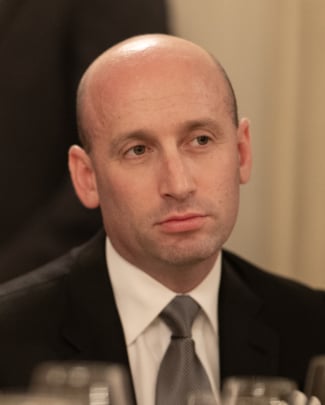
Intel for Intercessors: Stephen Miller
I Prayed

The Trump Administration’s Plan to Counter Rising Gas Prices
I Prayed

Partner with Us
Intercessors for America is the trusted resource for millions of people across the United States committed to praying for our nation. If you have benefited from IFA's resources and community, please consider joining us as a monthly support partner. As a 501(c)3 organization, it's through your support that all this possible.


We use cookies to ensure that we give you the best experience on our website. If you continue to use this site we will assume that you are happy with it. Privacy Policy



Comments
My concern about Jared Kushner: https://youtu.be/3cPisScbEJs