Your Car Is Being Watched: The Push to Stop Mass Surveillance on American Roads
 105 Views
 Comments (0)
 Share
Print
Share
Print
AI Insiders Sound the Alarm: ‘It Could Kill Us All’
RFK Jr.: Biden-Era HHS Became a ‘Collaborator in Child Trafficking’
New Jersey’s Gun Industry Law Heads Back to Court
Omar Declines Comment on Weapons Investigation Involving Her Son
Your Car Is Being Watched: The Push to Stop Mass Surveillance on American Roads
105 Views
Comments (0)
Share
Print
 I Prayed
have prayed
I Prayed
have prayed
A growing coalition of Republicans and Democrats is pushing back against a nationwide network of artificial intelligence-powered cameras that silently record the license plates of passing vehicles. The movement has reached every level of government, from state legislatures to Congress, and is raising urgent questions about how much surveillance Americans are willing to accept in the name of public safety.
Join others crying out to the Lord day and night.
At the heart of the controversy is the rapid expansion of automated license plate readers, or ALPRs, devices that can log the movement of any vehicle that passes within range. Critics say the sheer number of these cameras creates something far more intrusive than any single device: a map of where Americans go, when, and how often, all without a warrant.
From the Daily Caller:
Several state and federal officials are calling to restrict automated license plate readers (ALPRs), artificial intelligence-powered cameras that scan the plates of passing cars. Pushback to this technology — specifically Flock Safety cameras — has brought together Republicans and Democrats who say these tools amount to warrantless mass surveillance, while law enforcement warns that restricting them would hinder their ability to solve crimes.
At the state level, Texas Republican Gov. Greg Abbott blocked agencies from spending money on the cameras on Aug. 27, according to the Texas Tribune. Similarly, Florida’s Department of Transportation revoked permits for the devices on state highways on Aug. 31 and ordered them removed within 30 days, according to The New York Times.
A total of 201 local communities have canceled or not renewed ALPR contracts since the start of 2025, according to the Institute for Justice’s cancellation list.

The backlash has taken on a distinctly bipartisan character, unusual in a polarized political environment. In Pennsylvania, lawmakers from both parties have introduced at least nine bills in a matter of weeks to restrict or regulate the technology. State Rep. David Rowe, a Republican and chairman of the House Republican Policy Committee, partnered with fellow Republican Josh Bashline on a two-bill package that would place guardrails on ALPR use, including a local moratorium. On the Democratic side, state Sens. Nick Pisciotto and Patty Kim introduced companion legislation focused on oversight and accountability, paired with a House package led by Democratic Rep. Tarik Khan that would set rules for data access and establish civil penalties for misuse. Democratic Gov. Josh Shapiro called the cameras “not something in the public interest.”
In Tennessee, Knox County officials voted unanimously to remove the cameras in late August. County Mayor Glenn Jacobs had previously warned that a large network of cameras can effectively track a person’s movements across a region, which he argued crossed a constitutional line. The Electronic Frontier Foundation’s Rindala Alajaji said the opposition “crosses every political line” because communities recognize that a warrantless tracking grid violates civil liberties. At the federal level, Republican Reps. Thomas Massie and Eric Burlison introduced the Flock-Off Act, which would bar federal funding for ALPRs and give agencies 180 days to shut down existing systems. Texas Republican Rep. Keith Self separately proposed the PRIVACY Act, requiring a warrant before federal agencies can access ALPR data.
Not everyone agrees the cameras should go. In California, law enforcement has been among the most vocal defenders of the technology. Riverside County Sheriff Chad Bianco, president of the California State Sheriffs’ Association, argued that privacy concerns are unfounded and that the push against the cameras is driven by a “pro-criminal agenda.” The International Association of Chiefs of Police issued a statement in August affirming its support for ALPR use when conducted lawfully and with transparency, noting the cameras help solve violent crimes, locate missing persons, and recover stolen property. Bianco’s preferred solution is not removal but strict criminal penalties for any officer who abuses the data.
In California, legislative efforts to regulate the cameras have repeatedly stalled. The most recent attempt, a bill by Democratic state Sen. Sabrina Cervantes, was pulled from the assembly floor on the final day of the legislative session by Democratic Assembly Majority Leader Cecilia Aguiar-Curry, though Aguiar-Curry later said she supports the bill’s policy and expects it to be reintroduced. Critics noted the delay came despite broad support, leaving California without any legal safeguards for the technology.
Flock Safety, the leading ALPR vendor in the U.S., defended its cameras as an important public safety tool and said it supports thoughtful bipartisan legislation with privacy and accountability protections. Analysts noted, however, that the controversy is not unique to any one company. The same concerns apply to Axon, Motorola Solutions’ Vigilant unit, and Rekor, and critics argue that the entire business model of ALPR firms depends on mass tracking.
Scripture teaches that God entrusts governing authorities with the responsibility to protect the innocent, not to surveil the law-abiding without cause. The Fourth Amendment reflects a principle deeply rooted in the biblical understanding of human dignity: that a person’s movements, associations, and private life are not the government’s to claim without accountability. As cameras multiply on public roads, we are right to ask whether the tools being built in the name of safety are being built with adequate restraints. The convergence of Republicans and Democrats around this issue is a reminder that conscience-driven concern for civil liberties can still cross political lines. Intercessors are needed to pray that leaders craft policy that serves justice, respects privacy, and preserves the freedoms that allow the church to operate without fear of surveillance.

How are you praying about this issue? Share your prayers and scriptures in the comments below.
(Excerpt from the Daily Caller. Photo Credit: A Flock Safety ALPR (automated license plate reader) in Jackson County, Colorado, on May 25, 2026.
 Comments (0)
 Share
Post A Prayer
Print
I Prayed
have prayed
Post A Prayer
Share
Post A Prayer
Print
I Prayed
have prayed
Post A Prayer


Related Content

Trump Administration Exposes Surge in Dangerous Chinese Activity
I Prayed
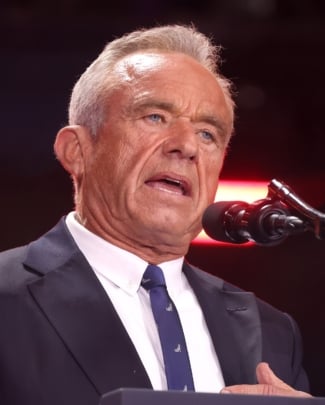
RFK Jr.: Biden-Era HHS Became a ‘Collaborator in Child Trafficking’
I Prayed



Partner with Us
Intercessors for America is the trusted resource for millions of people across the United States committed to praying for our nation. If you have benefited from IFA's resources and community, please consider joining us as a monthly support partner. As a 501(c)3 organization, it's through your support that all this possible.


We use cookies to ensure that we give you the best experience on our website. If you continue to use this site we will assume that you are happy with it. Privacy Policy


Comments
No comments have been posted yet; you can be the first!