Virginia Redistricting Spurs Move to ‘Make DC Square Again’
 3,424 Views
 Comments (2)
 Share (4)
Print
Share (4)
Print
Pentagon to Withdraw 5,000 Troops from Germany Amid Rising Tensions
Georgia GOP Could Move Toward Redistricting, Top Officials Say
Report Warns of Chinese CCP-Linked Researchers Inside U.S. Universities
DOJ Launches Probe Into Illinois Schools Over Gender Ideology Taught...
Virginia Redistricting Spurs Move to ‘Make DC Square Again’
3,424 Views
Comments (2)
Share (4)
Print
 I Prayed
have prayed
I Prayed
have prayed
(THE EPOCH TIMES) – A few months ago, Max Moore and his allies were voices in the social media wilderness.
Help support IFA monthly by becoming an MMP.
Their campaign to “Make DC Square Again”—an effort to return Virginia’s Arlington County and city of Alexandria to the District of Columbia—was getting likes and reposts on X amid a redistricting battle in the state. But social media is not quite reality.
One day later, Rep. Rich McCormick (R-Ga.) introduced legislation to repeal the 1840s retrocession that delivered the other side of the Potomac River to the Commonwealth of Virginia.
Any bid to restore the district’s original borders would have to overcome many hurdles, not least the opposition of locals who would lose representation in Congress. Even if it happened, it probably would not be enough to make Virginia a red state.
However, ahead of fiercely contested midterms, some Republicans see an opportunity to undo an old but questionable law and blunt the Democrats’ advance—a motivation in line with the long and often partisan battle over the District of Columbia and its borders. If President Donald Trump gets involved, the stakes could be raised further on an issue the courts have never resolved.
Moore, for his part, struck an optimistic note.
“I’m feeling pretty good,” he told The Epoch Times in a text message after the legislation was introduced.
Cosponsored by Reps. Earl “Buddy” Carter (R-Ga.) and Randy Fine (R-Fla.), McCormick’s bill was quickly referred to multiple committees.
Influential conservatives who back the idea now include Kevin Roberts, president of The Heritage Foundation, and Mike Howell, president of the Oversight Project, a government watchdog group.
Many local politicians were not thrilled.
Paul Strauss, the Democratic senior shadow senator for the District of Columbia whose role entails lobbying for statehood, told The Epoch Times in an email, “I, and every other sane person, oppose this.”
Eleanor Holmes Norton, the District of Columbia’s Democratic non-voting delegate to the House of Representatives, wrote on X that the proposal would amount to “disenfranchising hundreds of thousands of Virginia residents by making them D.C. residents without their input—or D.C.’s.”
In a video posted to X, Alexandria Mayor Alyia Gaskins described the idea as “absolutely ridiculous,” calling it an effort to “rewrite how this democracy is supposed to work.”
Nick Murray, a local activist for the “Make DC Square Again” movement, conceded that success was far from guaranteed, at least in the short term.
Even as a Republican-controlled Congress weighs the proposal, he sees a faster route to restoring the District of Columbia’s original borders—ones changed at least in part against the backdrop of Virginia’s 1840s slave trade.
“Although it seems unlikely that this will be fixed soon, all ‘DC Squarehood’ requires is an executive order,” he wrote in a text message to The Epoch Times.
Roger Pilon, founder of the Cato Institute’s Center for Constitutional Studies, sounded less sure of the feasibility of that path.
“Where’s the authority on the part of the president to issue an executive order?“ he asked. ”That’s a serious question right there.”
Yet Pilon, who has repeatedly testified to Congress on the issue of D.C. statehood, agreed with activists that Congress never had the authority to retrocede the Virginia portion of the district in the first place.
Pilon said he sees Trump as the likeliest president to force the issue, despite the political risks of stripping thousands of Virginians of political power.
Moore’s American Capital Project describes that constitutional language as “a one-way ratchet.” On that argument, Congress never had the authority to give back the territory it received.
Although the Federalist faction wanted Congress to have exclusive jurisdiction over the district, their opponents, the Democratic-Republicans, opposed what they saw as an attack on citizens’ rights. That dispute animated early debates over retrocession to Virginia and Maryland in the years after the district’s creation.
Alexandrians pushed for retrocession in the 1830s and 1840s. They cited poor treatment and infrastructure relative to those on the other side of the Potomac, as well as their lack of rights.
Historian Charles S. Clark noted that some wealthy Alexandrians also feared that the district would outlaw the slave trade.
The American Capital Project highlights the slavery connection on its website, stating: “The 1846 retrocession was driven by slave traders who wanted to escape federal jurisdiction. The ‘vote’ was organized by the very men who profited from human trafficking.”
In 1846, after the Virginia General Assembly gave the nod to retrocession, the U.S. House and Senate passed a retrocession act. Then came a referendum in Alexandria and Alexandria County—now Arlington County. Citizens of the county accused Alexandrians of fraud, claiming that they acted in secret.
President James K. Polk issued a proclamation affirming the result of that referendum several days later, setting the stage for the Virginia General Assembly to approve the retrocession bill in March 1847.
After Alexandria joined Virginia, the slave trade continued even as the remaining district outlawed it. Alexandria’s schools for its free blacks were also closed in accordance with state law.
In the succeeding decades, Presidents Abraham Lincoln and Howard Taft both mulled the reversal of retrocession.
Revived by a heavily Republican Congress after the Civil War and Lincoln’s assassination, according to Richards, the 1860s proposal eventually fell flat in the Senate as the South regained some political power during Reconstruction.
Taft’s push during the 1910s likewise failed to gain traction.
Moore dismissed the objections of Alexandrians and Arlingtonians.
“As a D.C. native, I don’t care about the opinion of people on stolen land,” he said. “That’s my land that slavery stole from D.C.”
Murray—not a D.C. native, although he is the grandson of a man who helped desegregate Washington’s police force—said he independently arrived at the idea of restoring the district’s original borders before joining forces with Moore.
Moore said an 1875 Supreme Court decision bearing on the retrocession, Phillips v. Payne, never settled whether it was constitutional in the first place.
In Pilon’s words, “The court dodged it.”
He agreed with Moore that any legal challenge to a Trump executive order reversing retrocession would go straight to the Supreme Court.
In Murray’s view, “there’s no drawback” to the executive order path.
“There’s a lot of upside if it succeeds,” he said.
Pilon questioned the optics of taking political representation away from hundreds of thousands of Virginians, contrasting that with the push for D.C. statehood.
“It’s one thing not to grant the vote,“ said Pilon, who said he believes that D.C. statehood would require a constitutional amendment. ”It’s quite another to take them away.”
Strauss said that “there should be more Americans allowed to participate in the democratic process … not less,” citing the District of Columbia as well as Puerto Rico, Guam, and the Virgin Islands.
Fine, who cosponsored the current legislation, told The Epoch Times that he was not sure whether leadership or the relevant committees were acting to advance the legislation.
Whatever happens with the campaign, Moore is committed to the new, old idea of a symmetrical Washington.
He said he cringes when he looks at the current map.
“I see the perfect diamond in my mind,“ he said. ”That’s the border of D.C.”
McCormick and Carter did not respond to requests for comment.

Pray for Virginia and other states considering redistricting!
 Comments (2)
 Share (4)
Post A Prayer
Print
I Prayed
have prayed
Post A Prayer
Share (4)
Post A Prayer
Print
I Prayed
have prayed
Post A Prayer


Related Content
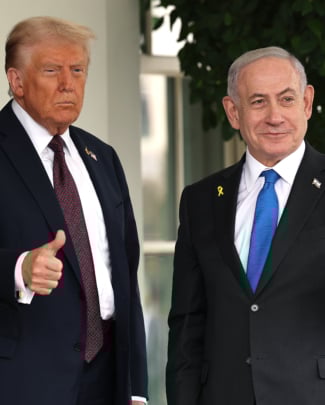
Trump’s Call to Iran, Netanyahu’s Vow in Gaza, and a Region in Flux
I Prayed

Pentagon Brings Grok and ChatGPT Into the War Room
I Prayed



Partner with Us
Intercessors for America is the trusted resource for millions of people across the United States committed to praying for our nation. If you have benefited from IFA's resources and community, please consider joining us as a monthly support partner. As a 501(c)3 organization, it's through your support that all this possible.


We use cookies to ensure that we give you the best experience on our website. If you continue to use this site we will assume that you are happy with it. Privacy Policy


Comments
DEAR LORD GOD
PLEASE ALLOW THE PEOPLE TO STOPTHE DEMOCRAT SCHEME TO REDRAW DISTRICTS MAPS IN THEIR FAVOR EXCLUSIVELY. PLEASE ALLOW THE PEOPLE TO INSIST IN FAIRNESS.
I ASK INJESUS’NAME
AMEN
Lord, what is needed is spiritual awakening, revival and reformation. Today is the day of salvation. Let the people of Virginia and Washington D.C. hear Your voice and turn to You in a flood of repentance, creating changed hearts and minds. Let all be done peaceably. No gerrymandering. No arguing. Let Thy Kingdom come and Thy will be done in Virginia and Washington D.C. in this matter. Amen.